USMLE Step 1 First-Time Pass Rate in 20241
85%
Get to know MUA at an upcoming event!
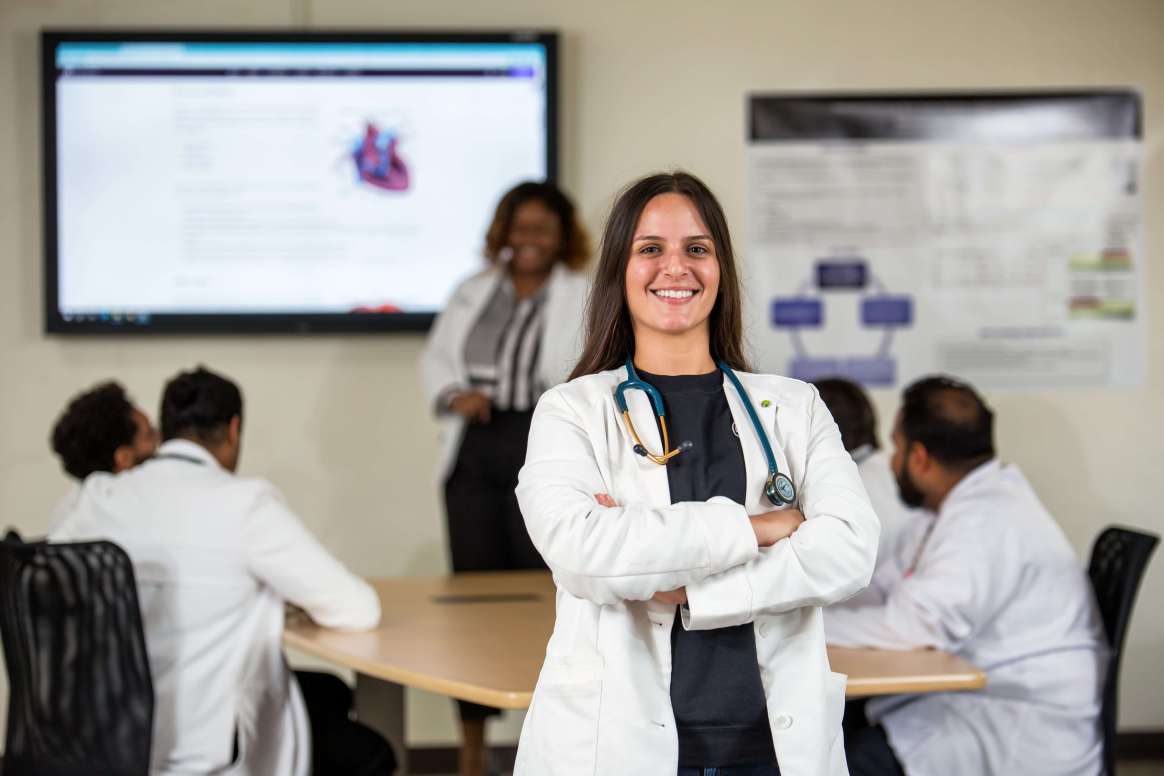
Explore the many benefits of attending MUA, including our supportive learning environment, comprehensive MD program and beautiful Caribbean campus on Nevis.
Founded in 1998, Medical University of the Americas (MUA) proudly delivers comprehensive medical instruction, early hands-on training and individualized support for aspiring physicians from around the world.
Thanks to our dedicated faculty and extensive support services, Medical University of the Americas MD program and pre-med students receive the guidance they need to achieve academic, USMLE and residency placement success.
If you plan to become a medical doctor who practices in the United States and Canada, or another international location, the supportive team at MUA can help you get there – read on to explore the many benefits of attending MUA, including Basic Science on safe and peaceful Nevis, clinical rotations in the United States and Canada, extensive licensing exam preparation, comprehensive support during the residency placement process, and personal enrichment initiatives that will make your medical school experience truly unforgettable.
MUA’s Basic Science (semesters 1-5 of the 4-year MD program) curriculum is based on the integrated, systems-based approach in use at top U.S. medical schools. Diverse learning opportunities include interactive lectures, small-group work sessions, individual and group presentations, team-based learning, and simulations with standardized patients.
In addition, our Doctor of Medicine (MD) program offers learning experiences you won’t often find at other international medical schools. For example, MUA’s first-semester anatomy class includes the dissection of real human cadavers, providing early hands-on training that will enrich your academic efforts and enhance your outcomes.
MUA also offers a unique research module that further develops students’ abilities to evaluate scientific evidence and critically appraise the always evolving body of medical literature. Students who successfully progress into Clinical Medicine (semesters 6-10 of the 4-year MD program) will complete this module before moving into 72 weeks of MUA clinical rotations in the U.S. and Canada.
At MUA, we are committed to helping you achieve your academic, personal and career practice goals. That is why we intentionally foster a learning environment where aspiring medical doctors can access the support and guidance they need to successfully navigate our rigorous medical education programs. This environment features:
We believe that regular and direct interactions with faculty is an important way for students to succeed in medical school. MUA instructors are consistently available during scheduled office hours, and are often willing to schedule meetings outside of those hours if students have conflicting academic engagements.
Additionally, the 5:1 student-to-faculty ratio in the Basic Science program allows students to benefit from a more personalized learning experience than they would receive in other classroom settings. Faculty have the bandwidth to help ensure that all participants are effectively engaging with the material, and can provide more direct help during classes and labs.
All MUA faculty members have an advanced medical or doctoral degree (MD, MBBS, PhD) in their academic field, with postgraduate training in their specialty, as well as demonstrated experience in teaching and research. They are passionate about medical instruction and truly care about your future success as a practicing physician.
Support does not end when our MD students commence their North American clinical rotations. Throughout this period, MUA faculty will be in contact with your attending physicians and preceptors to monitor your progress. They’ll personally review your logs and casework, and provide regular assessments to help ensure you’re progressing successfully. Learn more in the Clinical Medicine section below.
Students who would benefit from additional support have access to faculty advisors, teaching assistants, academic coaching and the Director of Student Services. The Learning Center provides help with active earning strategies, time management and exam preparation. Student counselling and wellness programming provide a variety of personal benefits. And our career advising programs, like the Specialty Spotlight Series, help ensure that future physicians are prepared to succeed after graduation.
Joining the close-knit and welcoming MUA student body is when medical school truly comes to life. Academic success always remains the top priority, but there’s no denying that the friendships and connections formed during Basic Science are what makes earning your MD degree a truly special experience. Check out our student clubs and organizations to explore your passions, meet new people and further develop your medical skills.
At MUA, future physicians can choose from several pathways that lead to the ultimate goal of earning a Doctor of Medicine (MD) degree. Our available programs include the 4-Year MD Program, Pre-Medical Master’s Program, 5-Year BSc/MD Program and 6-Year BSc/MD Program. The program that works best for you will depend on your education, experience and knowledge of required pre-medical information.
The 4-year MD program comprises 10 semesters, divided evenly between Basic Science and Clinical Medicine. Basic Science features classroom and lab-based learning on the Caribbean island of Nevis. Clinical Medicine covers 80 total weeks; it includes a research module and North American rotations at affiliated teaching hospitals.
The MUA Basic Science curriculum is systems and competency based, with both vertical (integrating essential scientific concepts with clinical processes) and horizontal (combining different disciplines within individual courses) integration.
Basic Science starts with foundational material in the first two semesters and progresses into systems-based studies during semesters three through five. Importantly, students acquire clinical skills in concert with their study of the basic sciences. The clinical skills program first starts with key communication abilities, and then requires students to develop their skills in obtaining a patient history and conducting a physical exam. Continuous development of a future physician’s clinical reasoning capacity is also essential.
Enhancing both basic scientific knowledge and clinical care abilities is designed to help ensure that students succeed in the Clinical Medicine portion of the 4-year MD program.
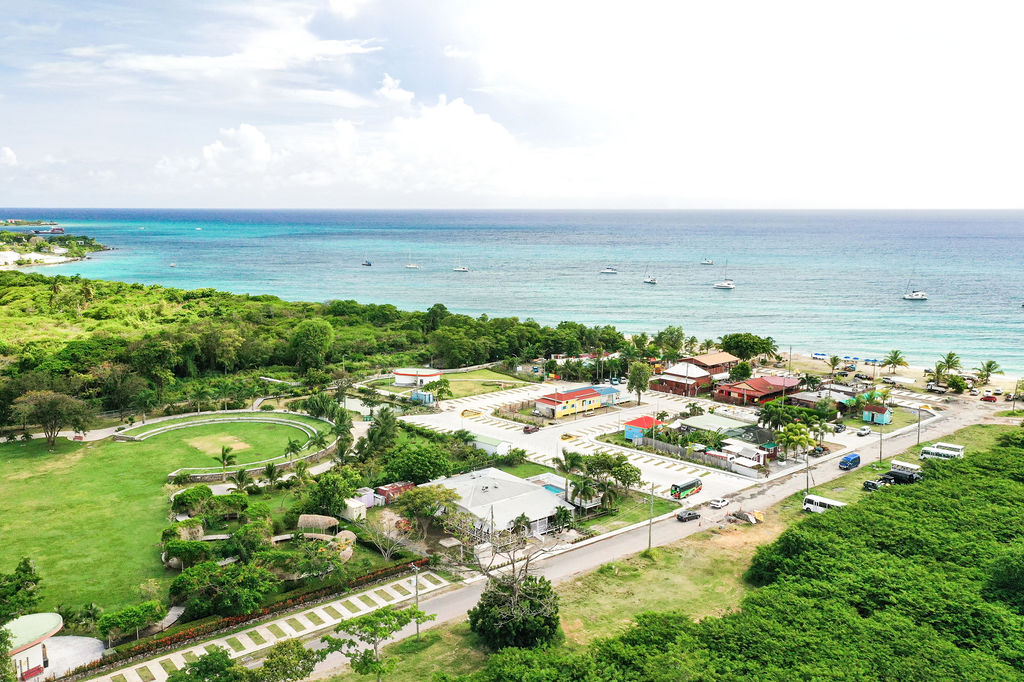
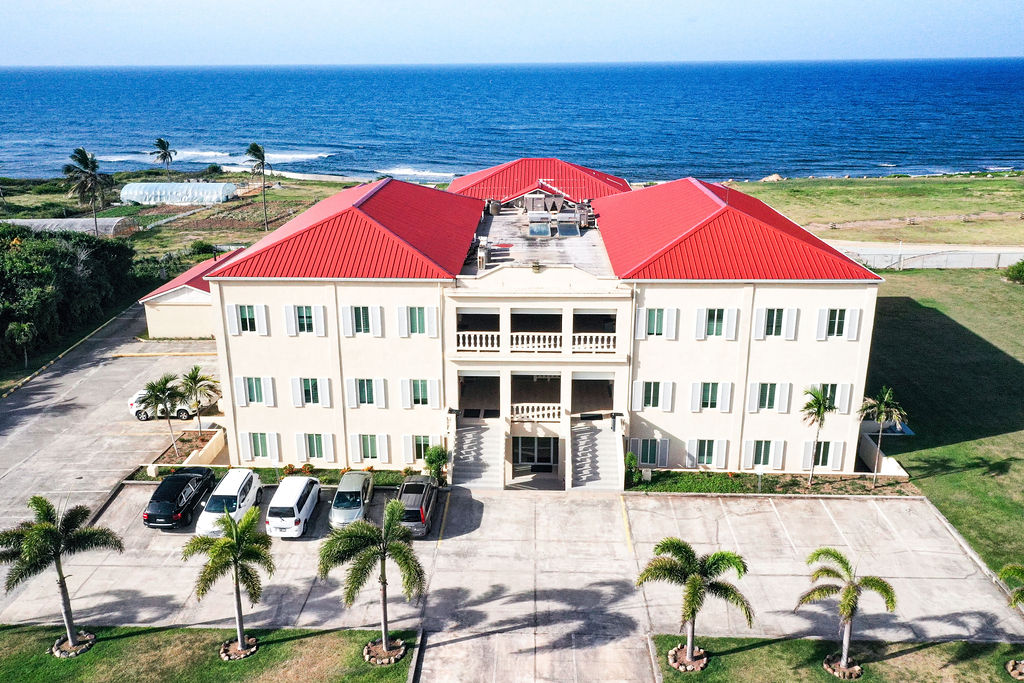
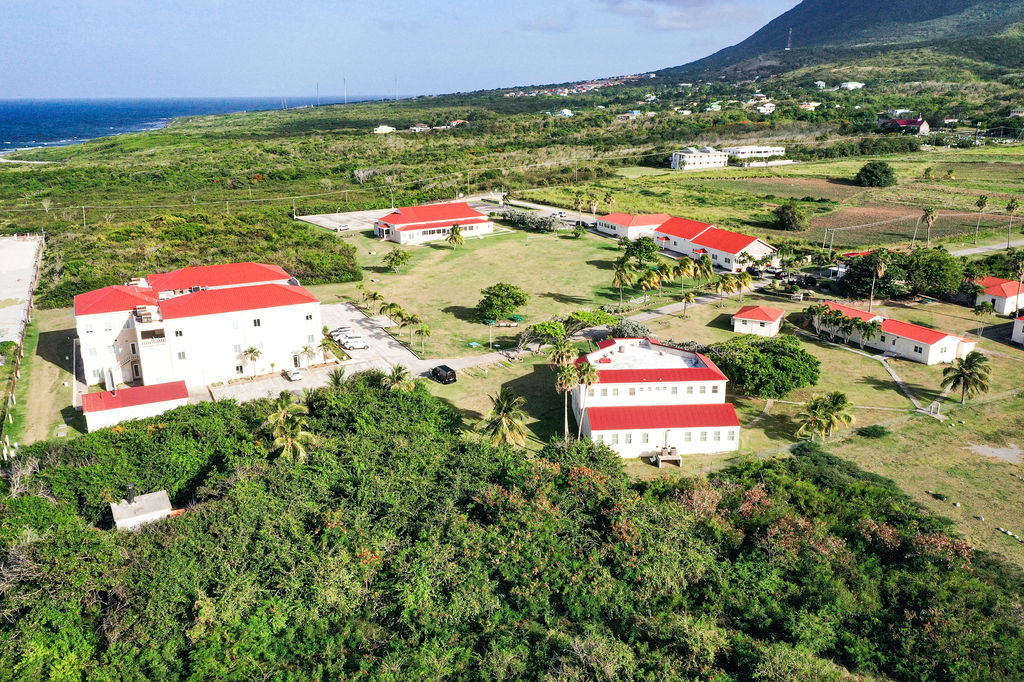
The Medical University of the Americas location is found on the lovely and safe Caribbean island of Nevis, part of the Federation of St. Kitts and Nevis. MUA’s 10-acre campus features modern classrooms (including a dedicated on-campus test center), fully equipped laboratories, an extensive library, a fitness center and more. Nevis itself is incredibly peaceful, as is our campus environment, making it the perfect place to dive into your medical studies without distractions.
Around the island, there are many student living choices, a multitude of dining options, and a host of activities that allow students to unwind and have some fun on their days off. From swimming and hiking, to exploring historical edifices from bygone eras, there’s something for everyone to enjoy near the MUA Nevis campus.
You’ll never forget what it’s like to live and study on a Caribbean island, nor the friendships and lifelong connections you make along the way!
The Clinical Medicine program features an 8-week research module, followed by 72 weeks of clinical rotations at associated teaching hospitals, clinics, and medical centers in the U.S. (including ACGME-approved locations) and Canada. There are 42 weeks of core electives and 30 weeks of elective rotations, chosen by each student based on the medical specialty they hope to pursue in residency.
During rotations, MUA offers a full complement of tools to help students organize patient notes, perform self-assessments and effectively manage various other elements of their learning experiences. Our commitment to delivering personalized support also continues, as MUA’s faculty team remains invested and available to students during rotations.
During this period, MUA’s objective is not only to ensure that each student can achieve academic success, but also to help maintain focus on career planning and personal growth opportunities. Students are encouraged to consider their own health and wellness needs, and to continue participating in relevant conferences and workshops. Resources and support are provided to achieve these goals.
Additionally, MUA works with students on the personal requirements that accompany clinical rotations, such as finding housing and maintaining a schedule that facilitates both on-site learning and ongoing study. The result is that MUA students are able to focus more fully on their clinical, professional and personal development during this critical phase of their medical education, knowing that the MUA team is behind them.
MUA’s extensive clinical network and curricular design also help ensure that students have a robust clinical experience that effectively prepares them to practice medicine. The school’s affiliated clinical sites in the U.S. and Canada provide students with the opportunity to immerse themselves in the finer points of direct patient care, and they receive significant hands-on training under the guidance and supervision of the clinical faculty and deans.
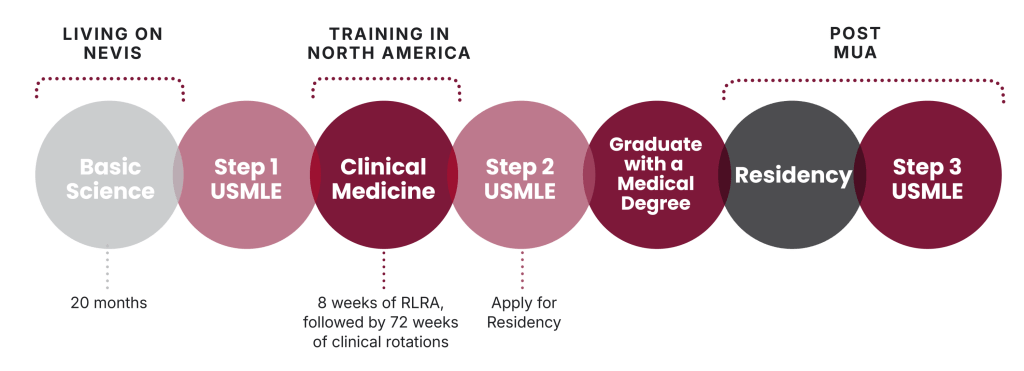
MUA students obtain residency placements in competitive programs across the full range of medical specialties in the U.S. and Canada. Graduates also excel in their residencies, with many becoming Chief Residents, and often pursue fellowship program opportunities following residency.
The extensive experience progressively gained through each clinical rotation, combined with MUA’s ongoing oversight, prepares students to achieve academic and residency placement success. Additionally, MUA faculty and student support services like the Road to Residency Program, which clearly highlights all steps required to gain a desirable residency position, prepare students for the entirety of the residency placement process, from application to interviews to the ranking period.
Our goal is to do everything possible to make sure MUA students receive the training, development and support they need to earn the residency they want and ultimately succeed as practicing medical doctors.
MUA is proud to provide comprehensive medical education programs at accessible costs. Additionally, to further support our students as they undertake the journey from medical school to practice, we provide meaningful grants and scholarships that can be applied against tuition. Examples include:
MUA is also one of the select international medical schools approved to participate in U.S. Federal Student Aid programs delivered through the Department of Education. 4-year MD program participants from the United States are eligible to apply for relevant student loans. Participants from Canada (excepting those from ON, BC and NL) are eligible to apply for student loans from their home province.
Medical University of the Americas is accredited by the Accreditation Commission on Colleges of Medicine. MD program graduates have gone on to practice as independent physicians in the U.S., Canada and internationally.
MUA’s 4-year MD program is accredited by the Accreditation Commission on Colleges of Medicine (ACCM). The 4-year MD program and pre-med programs are accredited by the medical school accreditation body of St. Kitts and Nevis.
The United States Department of Education, via the National Committee on Foreign Medical Education and Accreditation (NCFMEA), reviews the standards countries use to accredit medical schools. The NCFMEA has determined that the accreditation standards used by the ACCM to accredit MUA’s MD program are comparable to those used by the Liaison Committee on Medical Education (LCME), the accrediting body that accredits MD degree-granting medical programs in the United States.
Medical University of the Americas is one of the few international medical schools with approvals in the key states of New York, California and Florida. These states mandate institutional review and approval prior to granting access to available rotation, residency and practice opportunities. Other states rely on these reviews as part of their own approval processes. MUA students who successfully complete the requisite licensing examinations are eligible to practice medicine in Canada, Puerto Rico and all 50 U.S. states.
Specifically, the following bodies have approved, recognized or licensed Medical University of the Americas:
Florida Department of Education
Commission for Independent Education
325 West Gaines Street
Tallahassee, FL 32399-0400
(888) 224-6684 (toll-free)
Canadians often make up a large proportion of incoming MUA classes, and while they’re attracted to MUA for all the same reasons that draw non-Canadian students, these country-specific reasons stand out:
Canadian students can pay 4-year MD program tuition and administrative fees in Canadian currency (CAD), reducing concerns about managing the fluctuating exchange rate and generating significant savings over 10 semesters. Please note, scholarships are also awarded in CAD for Canadians.
MUA has a strong track record of securing clinical rotations and residency placements in Canada. This allows Canadians to undertake portions of their training closer to home.
MUA provides extensive preparation for the USMLE Step 1, which also effectively prepares Canadians for the Medical Council of Canada Qualifying Examination (MCCQE). Please note, all 4-year MD program students must achieve success on the USMLE Step 1 and USMLE Step 2 CK, regardless of where they hope to one day practice.
Yes, successful 4-year MD program participants undertake rotations in the United States and Canada. The rotations period last 72 weeks; 42 in core rotations and 30 in elective rotations.
In order to enter the 4-year MD program, future physicians must complete relevant undergraduate coursework or an MUA pre-med to MD program. There are also application submission requirements, such as official transcripts, letters of recommendation and a personal statement (max. 500 words). Learn more.
Yes, the MUA faculty team is committed to helping students achieve academic, USMLE and residency success. Our MD program participants earn residency positions in the U.S. and Canada at notably high rates, across the full range of medical specialties. Learn more.
The island of Nevis is the perfect place to undertake dedicated medical school studies. It is safe and peaceful, reducing distractions for when it’s time to focus. And there are also many fun Caribbean activities to enjoy when it’s time to unwind, such as swimming, hiking and dining.
1. First-time pass rate defined as total number of students passing the USMLE Step 1 on their first attempt divided by the total number of students taking USMLE Step 1 for the first time in calendar year 2024. In order to sit for the USMLE Step 1 exam, the student must successfully complete the Basic Science curriculum and such other prerequisites as the school may establish at its discretion.
2. First-time pass rate defined as total number of students passing the USMLE Step 2 CK on their first attempt divided by the total number of students taking USMLE Step 2 CK for the first time in calendar year 2024. In order to sit for the USMLE Step 2 CK exam, the student must successfully complete the Clinical Medicine curriculum and such other prerequisites as the school may establish at its discretion.
3. 93% Three-Year Residency Placement Rate is the percentage of students attaining a residency position out of all graduates or expected graduates in 2023-24, 2024-25 and 2025-26 who were active applicants in the NRMP match or attained a residency outside the NRMP match.